8 Jun 2026
Cluster Formations and Bonus Activation Rates Driving Longer Playtimes on Mobile Reels
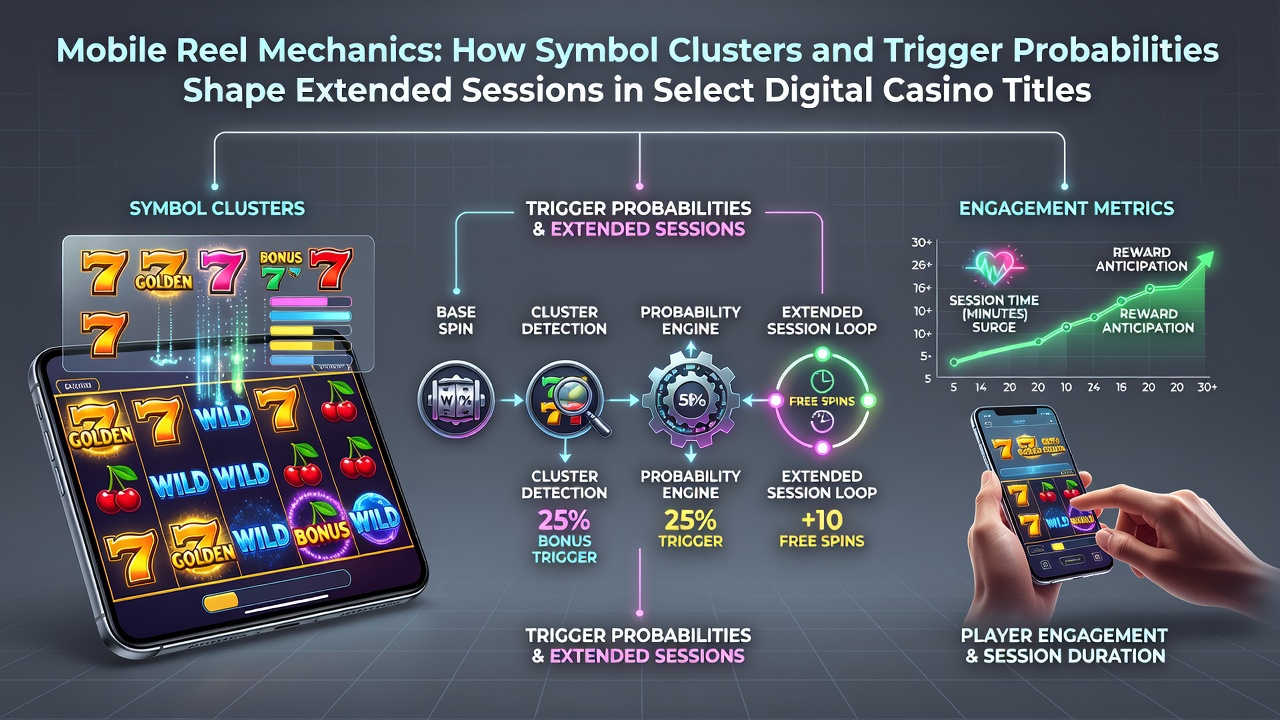
Digital casino platforms continue to refine reel mechanics that rely on symbol clusters rather than traditional paylines, and these adjustments directly influence how long players remain engaged on mobile devices. Cluster systems require matching symbols to occupy adjacent positions across a grid, which creates multiple win opportunities within a single spin and sustains momentum through cascading replacements. Data from regulatory filings shows that titles built around these mechanics often report session durations extending beyond the averages seen in fixed-line formats, because each successful cluster removal feeds into subsequent drops without requiring a new wager.
Mechanics Behind Symbol Cluster Development
Cluster mechanics operate on grids that typically range from five by five to eight by eight positions, where symbols connect horizontally and vertically but not diagonally in most implementations. When a cluster reaches the required minimum size, usually five or more identical symbols, the game registers a win and removes those icons, allowing new symbols to fall into place from above. Observers note that this replacement process repeats until no further clusters form, and the cumulative effect keeps the reels in motion for several seconds per spin. Mobile interfaces optimize this sequence through touch-responsive animations that maintain visual clarity even on smaller screens, which prevents interruptions that could otherwise shorten play sessions.
Developers adjust cluster thresholds and grid sizes to balance frequency against payout scale, and research from gaming laboratories indicates that moderate minimum sizes produce more consistent activation rates. Those who've examined payout tables across multiple releases find that higher cluster requirements pair with larger multipliers to compensate for lower occurrence, while smaller thresholds generate frequent small outcomes that compound over time. The resulting rhythm encourages continued spins because players experience regular feedback without long gaps between results.
Probability Calculations for Bonus Triggers
Trigger probabilities determine how often special features activate, and these calculations integrate directly with cluster formation rules in many contemporary titles. Bonus rounds often require specific scatter symbols to land in designated quantities, yet some designs tie activation to cluster size or the number of consecutive cascades within one spin. Figures from independent testing facilities reveal that trigger rates between 3 percent and 8 percent per spin correlate with extended session lengths, because players encounter features often enough to sustain interest while the base game continues to deliver incremental wins. Mobile platforms further support these rates through optimized random number generators that maintain consistency across varying connection speeds.
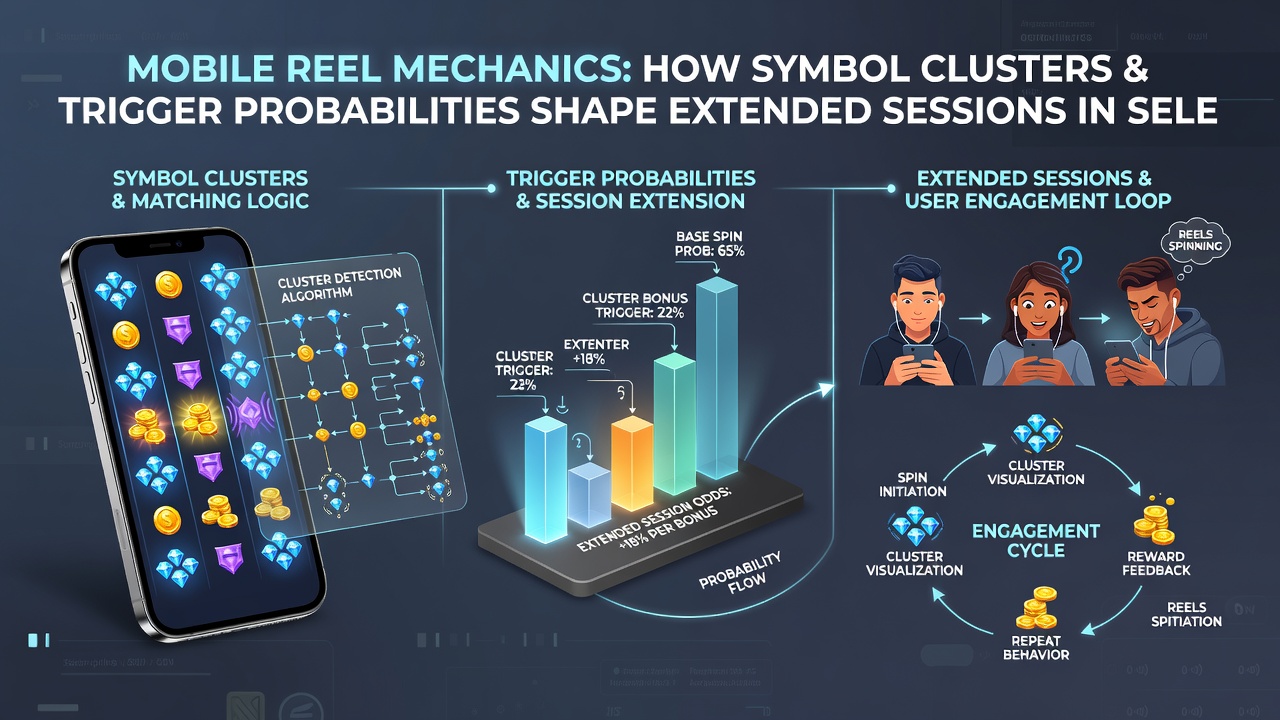
Engineers calibrate these probabilities using weighted symbol distributions that account for both cluster potential and scatter placement. When a title incorporates expanding wilds or multipliers that grow with each cascade, the combined probability structure increases the chance of entering a feature round after a sequence of base game wins. Reports compiled by the New Jersey Division of Gaming Enforcement document how such layered mechanics appear in approved mobile offerings, and the data shows measurable impacts on average spins per session. Players encounter these systems in games that emphasize chain reactions, where one successful cluster raises the likelihood of additional alignments in the next drop.
Influence on Session Duration Across Mobile Platforms
Extended play emerges when cluster mechanics and trigger probabilities align to create a steady stream of outcomes without excessive dry spells. Studies conducted by university-affiliated research groups, including those associated with the University of Nevada, Reno, have tracked player behavior across thousands of sessions and found that titles featuring cascade-enabled clusters maintain engagement levels higher than static reel formats. The continuous visual feedback on mobile screens, combined with haptic responses during wins, reinforces the perception of ongoing activity and reduces the impulse to exit after a short period.
Design teams incorporate adaptive difficulty adjustments in some releases, where recent cluster activity slightly influences upcoming symbol distributions to maintain flow. This approach keeps the mathematical return to player consistent while smoothing variance enough to support longer sessions. Data collected through platform analytics demonstrates that users on smartphones and tablets record higher spin counts when features activate within predictable intervals, and the effect holds across different stake levels available in regulated markets. As of June 2026, several operators have expanded their mobile libraries with titles that refine these parameters further, incorporating larger grids and variable cluster rules that respond to player patterns detected in real time.
Comparative Performance in Selected Digital Titles
Certain releases illustrate how cluster size and trigger weighting combine to shape play length. Games that utilize eight-symbol minimum clusters alongside frequent scatter placements tend to produce shorter but more intense sessions, whereas titles with five-symbol thresholds and chained multipliers encourage prolonged interaction through repeated small-to-medium outcomes. Observers tracking performance metrics across regions note that mobile-exclusive optimizations, such as reduced animation times and swipe gestures for manual stopping, amplify these tendencies by keeping the interface responsive during extended sequences. The Canadian Centre for Gaming Research has published summaries indicating that titles balancing these elements achieve higher retention rates on handheld devices compared with desktop counterparts.
Conclusion
Symbol cluster systems paired with calibrated trigger probabilities continue to define how mobile reel experiences unfold, and the interplay between these elements determines the length and rhythm of individual sessions. Regulatory records and laboratory analyses confirm that thoughtful weighting of cluster requirements and bonus activation rates sustains player activity by delivering consistent feedback loops. Mobile platforms enhance this dynamic through interface refinements that maintain engagement across varying usage contexts, resulting in measurable differences in session metrics across available titles.