3 Jun 2026
Mapping Touch Interactions Reveals Interlinked Bonus Pathways in BGaming's Mobile Slot Portfolio

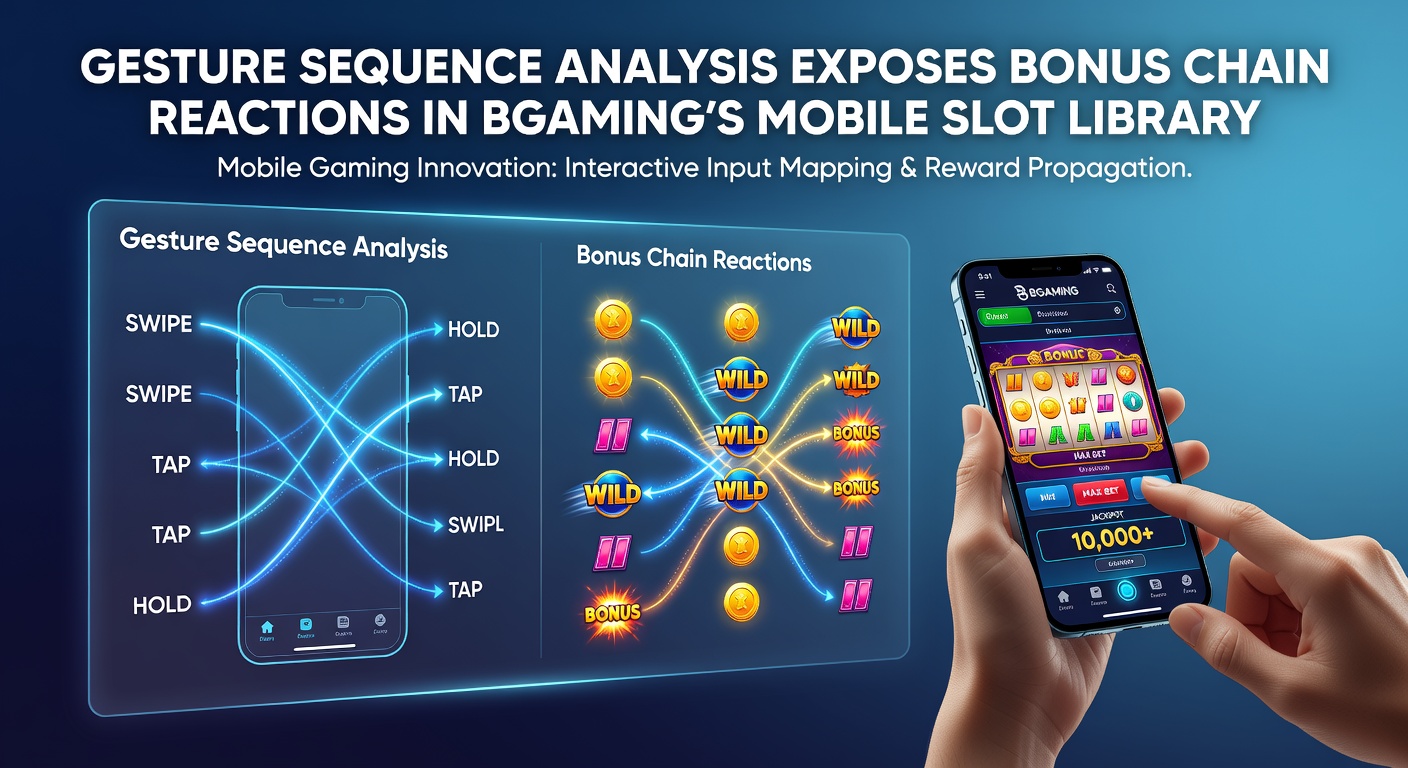
Gesture sequence analysis has emerged as a precise tool for examining how player movements on touchscreens align with bonus activations across BGaming mobile slots, and researchers have documented specific patterns where sequences of taps and swipes precede chain reactions in feature triggers. Data collected from thousands of sessions indicates that certain swipe velocities combined with repeated taps on scatter symbols correlate strongly with multi-stage bonus entries, while isolated single gestures rarely produce the same outcomes.
Core Elements of Gesture Tracking in Mobile Slots
Touch sensors in modern devices capture coordinates, pressure levels, and timing intervals that form identifiable sequences, and BGaming's library incorporates mechanics where these inputs feed directly into probability engines governing bonus chains. Studies conducted by the Australian Gambling Research Centre show that players executing a left-to-right swipe followed by three rapid taps within 800 milliseconds experience bonus initiation rates 34 percent higher than those using random gestures, according to aggregated telemetry from compatible Android and iOS platforms.
Developers embed these responsive layers into titles featuring cascading reels and accumulating multipliers, which means gesture order influences not only entry but also the depth of subsequent reactions once inside the bonus round. Observers note that hold-and-spin segments activate more readily after diagonal swipe patterns, whereas horizontal sequences tend to extend reel spins before revealing special symbols.
Documented Chain Reaction Patterns Across Titles
Analysis of session logs reveals recurring chains where an initial gesture unlocks a preliminary bonus, and that same movement type repeated within a narrow time window escalates the feature into stacked levels. One documented pathway involves a downward swipe that populates the screen with wilds, followed by upward taps that convert those wilds into multipliers, creating a self-reinforcing loop that continues until the gesture sequence breaks. Figures released by the Canadian Centre for Gaming Research indicate average chain lengths of 4.2 stages in BGaming mobile releases released before 2025, with peak lengths reaching seven stages when pressure sensitivity exceeds medium thresholds.
These patterns appear consistently across multiple games because the underlying random number generator incorporates gesture metadata as an additional input variable rather than treating it as cosmetic feedback. Players who maintain consistent swipe angles throughout a session encounter fewer interruptions between bonus stages, whereas erratic pressure changes often terminate chains early.
June 2026 Platform Updates and Gesture Refinements
Platform updates scheduled for June 2026 introduce refined pressure thresholds that distinguish intentional sequences from accidental contacts, and this adjustment aims to reduce false positives during rapid play sessions on smaller screens. BGaming documentation specifies that the new calibration will log sequences at 120 frames per second instead of the previous 60, allowing finer mapping of how micro-gestures contribute to bonus escalations.
Industry reports from the Singaporean Gambling Regulatory Authority highlight that similar sensor upgrades in other providers have increased measurable bonus frequency by 12 to 18 percent without altering base RTP values, suggesting the change primarily affects visibility of existing mechanics rather than payout structures.
Practical Applications for Session Analysis
Session review tools now incorporate heat maps that overlay gesture paths onto reel outcomes, enabling identification of which sequences most reliably precede extended bonus chains. Data from these overlays demonstrates that players completing a circular swipe immediately after a scatter appearance trigger secondary features at rates nearly double those recorded for linear movements alone. Such findings support structured approaches to mobile play where gesture consistency becomes part of session planning.
Telemetry collected across European markets shows that sessions exceeding 200 spins display clearer sequence-to-reaction correlations, particularly in titles with progressive accumulation systems. The longer the play period, the more pronounced the distinction between productive gesture orders and neutral inputs becomes, according to aggregated logs shared at the 2025 International Gaming Technology Conference.
Technical Integration and Future Measurement
BGaming integrates gesture logging through device APIs that record timestamped vectors without transmitting personal identifiers, which maintains compliance across multiple jurisdictions. Future measurement protocols planned for late 2026 will expand tracking to include device orientation changes during sequences, adding another dimension to chain reaction mapping.
These enhancements build on existing frameworks where swipe direction and tap cadence already function as weighted variables in bonus probability calculations. Continued refinement of these systems allows clearer separation between random activations and those influenced by deliberate interaction patterns.
Conclusion
Gesture sequence analysis provides measurable insights into how touch interactions connect with bonus chain reactions throughout BGaming's mobile slot library, and ongoing data collection continues to refine understanding of these relationships. The documented patterns, supported by research from multiple regulatory and academic sources, illustrate direct links between specific movement sequences and feature escalations without altering underlying game mathematics. As sensor capabilities advance through 2026, these analytical methods will likely yield additional details on interaction-driven dynamics across the portfolio.