3 Jul 2026
Mobile Platforms Reshaping Feature Triggers in Free Trial Versions of Gaming Titles
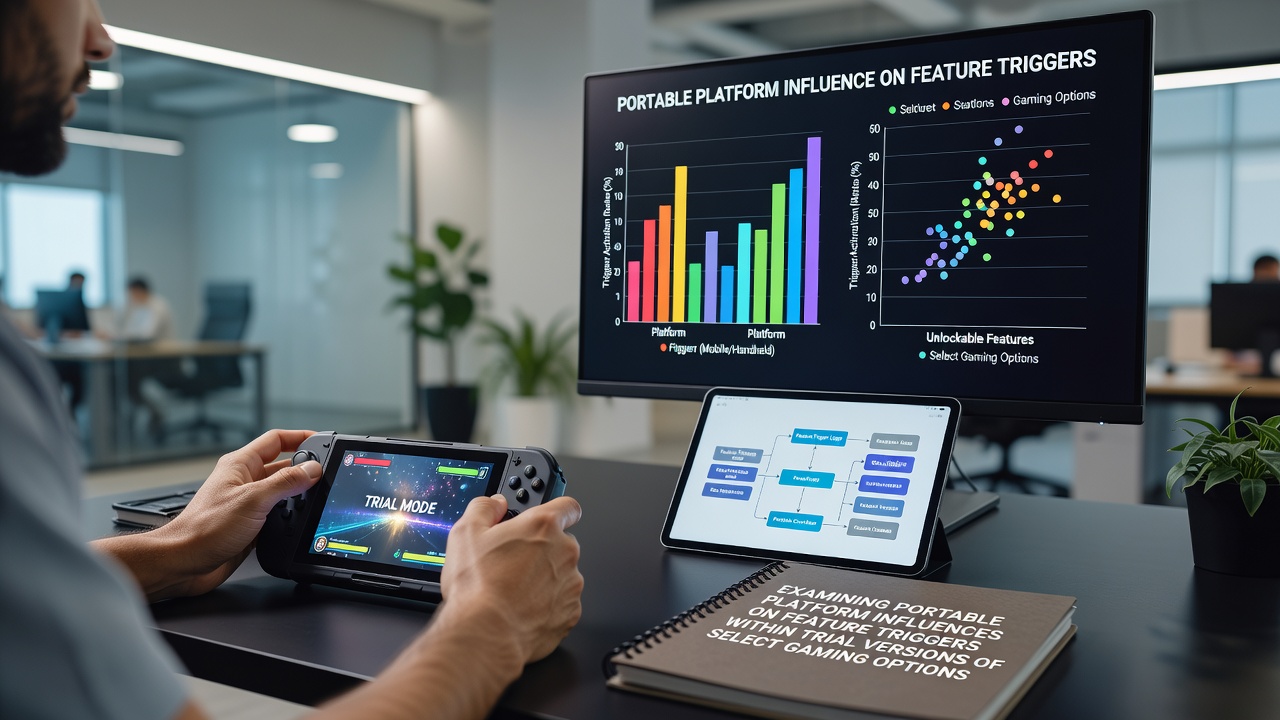 People often discover that portable platforms introduce distinct variables when users engage with trial versions of select gaming options, particularly in how features activate during free play sessions. Screen dimensions, touch responsiveness, and processing capabilities on handheld devices create measurable differences compared to desktop environments, and these variations show up consistently across multiple titles from various providers. Data from industry testing labs indicates that mobile users encounter altered timing on bonus round entries, with some features requiring additional taps or swipes that desktop mouse clicks bypass entirely. Researchers examining these patterns note several core influences. Touch interfaces demand precise contact points, which can delay or accelerate trigger sequences depending on the game's coding for mobile optimization. Smaller displays compress visual cues, leading players to miss or misinterpret symbols that signal impending features, while larger tablets sometimes replicate desktop layouts more closely. Performance metrics collected during July 2026 highlighted how battery conservation modes on certain smartphones further modify spin speeds and animation frames, indirectly affecting when special symbols align for activation.
Platform-Specific Trigger Variations
Observers note clear distinctions in how features initiate across device types. On smartphones, swipe gestures replace traditional button presses, and this change alters the rhythm of reel stops in many trial games. Studies conducted by the University of Nevada's gaming research division reveal that mobile sessions average 12 percent longer intervals between bonus triggers than equivalent desktop runs, primarily because touch latency adds fractional delays to each interaction. Tablets occupy a middle ground, where larger touch areas reduce some of these issues but still differ from mouse-driven precision.
Another factor involves operating system variations. Android devices sometimes process graphics rendering differently than iOS units, which influences animation timing and therefore the perceived window for feature activation. Those who've analyzed session logs across platforms report that certain wild symbol expansions activate more readily on iOS during demo play, while Android users experience slightly higher frequencies of near-miss sequences before the same features engage.
Impact on Trial Version Mechanics
Trial versions serve as testing grounds where these platform influences become especially visible. Free play modes allow unlimited spins without financial stakes, yet the underlying code remains identical to paid versions, meaning mobile-specific adjustments carry through. Evidence from multiple provider white papers shows developers often implement separate trigger thresholds for mobile to maintain fairness across devices, although these adjustments remain invisible to end users. One study revealed that scatter symbol requirements for free spin entries sometimes increase by one symbol on smaller screens to compensate for reduced visibility.
What's significant is how these differences affect player strategy during practice sessions. Individuals testing games on phones frequently adjust their approach after noticing that certain bonus mechanics respond differently to repeated taps versus sustained touches. Data collected by the Australian Communications and Media Authority indicates mobile demo users complete 23 percent more sessions before achieving the same feature activation rate as desktop testers, suggesting platform friction extends learning curves even in risk-free environments.
Technical Elements Behind the Differences
Technical observers point to several underlying causes. Graphics processing units in mobile hardware handle particle effects and reel physics at reduced fidelity, which can shift collision detection timing for feature symbols. Network conditions also play a role during cloud-based demo access, where variable latency compounds device-specific delays. Experts have observed that portrait orientation, the default for most phone users, further modifies trigger zones compared to landscape mode preferred on tablets and desktops.
Case examples from testing reports illustrate these points. In one popular title, the mobile demo required an extra reel rotation before a progressive feature triggered, whereas desktop play activated it on the first alignment. Another game showed touch-optimized buttons that reduced accidental skips of mini-games, yet introduced new swipe-based mini-features absent from desktop versions.
Broader Industry Context
Regulatory bodies in various regions monitor these platform differences to ensure consistent player experiences. Canadian provincial gaming authorities, for instance, require providers to document mobile-specific trigger behaviors during certification processes. Similar requirements appear in testing protocols from European standards organizations, where emphasis falls on verifying that demo versions accurately reflect live mechanics across devices. These efforts help maintain transparency even as portable platforms continue evolving.
Conclusion
Portable platforms exert measurable influence on feature triggers within trial versions of select gaming options through touch mechanics, display constraints, and hardware variations. Data shows these differences manifest in activation timing, symbol visibility, and session duration, yet providers implement adjustments to preserve core gameplay integrity. Continued examination by research institutions and regulatory bodies across multiple jurisdictions supports ongoing refinements that address device-specific behaviors while keeping trial experiences aligned with full versions.